
There are weeks in Satpura when the jungle quietly decides to put on a show — not with grand theatrical roars, but with small, precise moments that stay with you long after you’ve left. This was one of those weeks. Whether you are exploring from a carefully chosen accommodation in Pachmarhi or heading deeper into the reserve from Madai, the forest this week had something for everyone who was paying attention.A flash of electric blue and burnt orange in the sal understorey at dawn.
A black-and-white bird threading impossibly low over the Denwa, its lower bill cutting the water like a blade. Fresh pug marks near a shaded waterhole, still crisp in the afternoon mud. Our naturalist leaned in close, studied the spacing, and simply said — “She passed here this morning.”This is what a safari near Pachmarhi feels like when the forest is in its full pre-monsoon mood. And right now, Satpura is very much in the mood.Here is everything that moved, called, flew, and left its mark this week.
Gate-Wise Sighting Summary: Week of May 2026
Note: Wildlife sightings are inherently unpredictable and vary day to day. The figures below are rough indicative trends based on naturalist observations and guest reports — not guaranteed outcomes.
Madai Gate (Core Zone)
- Tiger: ~60–65% sighting probability | High activity near waterholes and a known waterfall trail
- Leopard: ~30–35% | Movement reported in rocky ridge sections
- Sloth Bear: ~40–45% | Consistent activity around Mahua groves
- Indian Pitta: Heard regularly at dawn, occasional visual sightings
Churna Gate (Core Zone)
- Tiger: ~45–50% | Tracks confirmed, one likely male territorial movement
- Leopard: ~25–30% | Evening activity near thick cover
- Sloth Bear: ~35% | Active around fruiting trees
Panarpani Gate (Buffer Zone)
- Tiger: ~20–25% | Occasional crossing recorded
- Leopard: ~35–40% | Buffer zones often produce excellent leopard sightings
- Night Safari: Active — good movement of smaller predators and deer
- Indian Pitta: Calling strongly through the buffer sal forest
Parsapani Gate (Buffer Zone)
- Overall mammal activity: Moderate
- Special interest: Excellent for birding and waterhole observation
- Sloth Bear: ~30% | Mahua and berry season keeping them visible
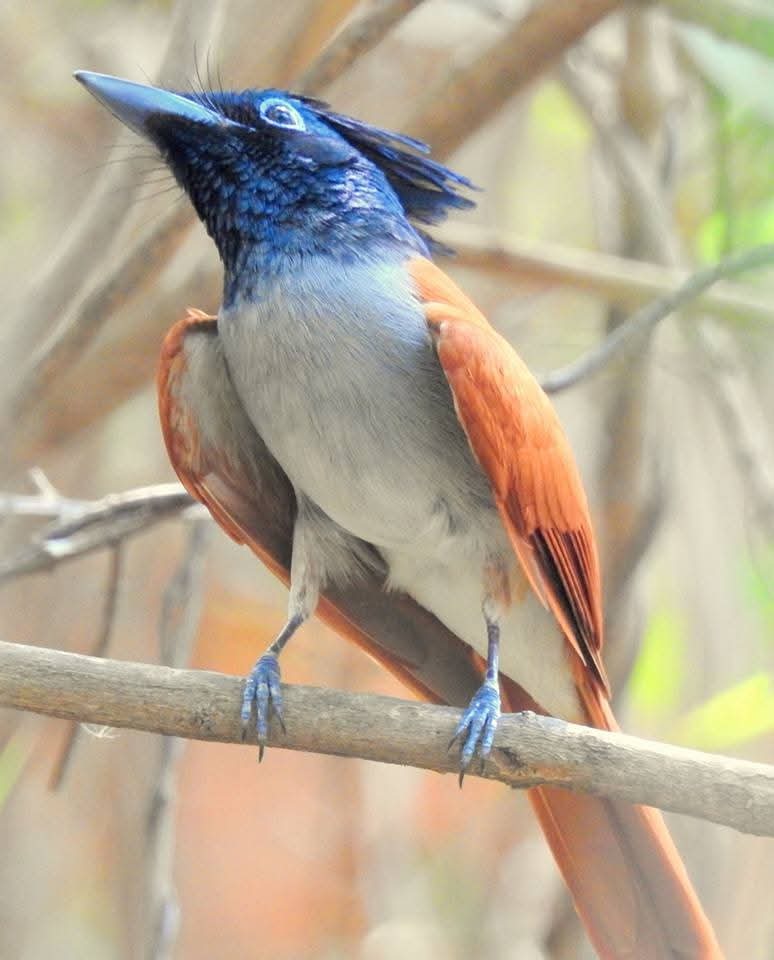
The Indian Pitta Has Arrived — And It Is Everywhere in the Sal
If you know birding in Satpura, you know the moment the Indian Pitta arrives, the forest changes its entire personality.
This week, the Pitta was calling from almost every dense patch of the sal understorey — that unmistakable two-note whistle, urgent and crystal-clear, cutting through the morning mist before the jungle had even fully woken up. Several guests on early morning jeep safaris managed a brief visual near the Madai zone — a streak of jewel-green, cobalt, chestnut and cream, gone in seconds.
The Indian Pitta arrives in Central India between May and June for its breeding season, migrating from its wintering grounds in peninsular India and Sri Lanka. That it chooses the moist sal and mixed forests of Satpura says something about the quality of this ecosystem — dense leaf litter, cool microhabitats, and the kind of quiet that most forests in India no longer offer.
If you have been following our earlier piece on where to spot the Indian Pitta in India, Satpura right now is arguably at its peak for this bird. Early mornings, before 7 AM, near any dense forest section — that is your window.
“The Indian Pitta — Satpura’s most anticipated seasonal arrival, calling since early May”
The Indian Skimmer on the Denwa — A Bird Running Out of Rivers
This is the sighting that had our naturalist genuinely emotional this week.
Just as the afternoon light went golden over the Denwa backwaters, a small group of Indian Skimmers appeared — flying low, impossibly precise, their elongated lower bills slicing the river
surface with a clean efficiency that seems almost mechanical until you realise you are watching one of India’s most threatened birds simply trying to feed.
The Indian Skimmer is unmistakable — black cap, vivid orange bill, brilliant white body — and feeds by flying low over water with its longer lower mandible skimming the surface to catch small fish. What makes a sighting here particularly meaningful is the context: the Indian Skimmer is now classified as Endangered, with present breeding records from the Tawa Reservoir near Satpura Tiger Reserve in Madhya Pradesh — making the Denwa corridor one of the last genuinely important habitats for this species in Central India. Wikipedia BirdLife International
- The population has been declining steadily, threatened by sand mining, irrigation projects, and the loss of exposed sandbars that the birds rely on for nesting year after year. India Bird Watching
- When you watch a Skimmer work the Denwa at dusk from a canoe, you are not just watching a bird. You are watching a species in a quiet fight for survival — and Satpura is one of the few places in India giving it a fighting chance.
- For guests staying at Pandav’s properties, our naturalist-guided canoe safaris on the Denwa are specifically timed to coincide with the Skimmer’s most active feeding hours late afternoon into early evening.
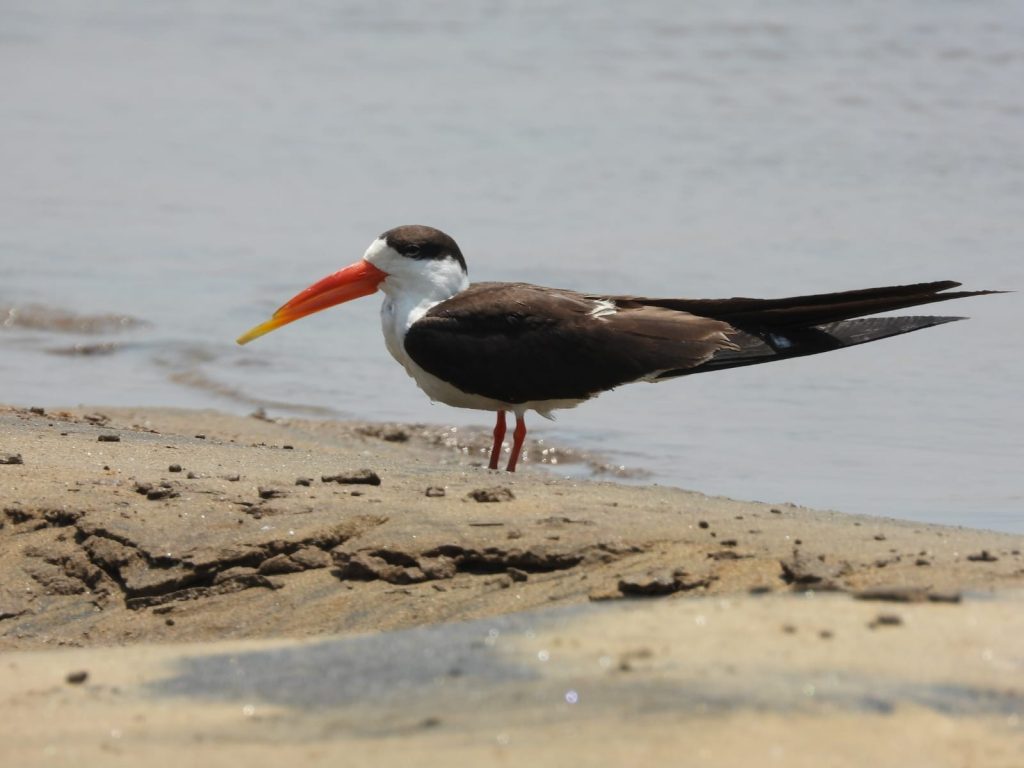
“The Denwa at dusk feeding hour for the Indian Skimmer, one of Central India’s rarest river birds”
Tiger Tracks, Waterhole Moments & Why Right Now Is the Best Time to Visit
This week our naturalist made an observation that is worth sharing with every guest who has written in asking about tiger sightings at Satpura.
“The waterholes and the waterfall trail near Madai are where you want to be right now. The heat is pushing them out into the open in ways we don’t always see. This is genuinely one of the best windows in the year for photography — the light, the terrain, the predictability of their movement. Everything aligns.”
This is where staying at Pandav makes a real difference.
- When our naturalist picks up early intelligence fresh tracks near a waterhole, a territorial call at first light, a sambar alarm from a section that has been quiet all week we don’t wait. Guests staying with us are informed immediately, so they can head out while the window is still open. That tip, that ten-minute head start, is often the difference between a sighting and a missed moment. It is not something you can book online. It is the quiet privilege of being in the right place, with the right people, at the right time — and it is something only a Pandav guest experiences.
This is the difference between a stay in Pachmarhi that simply books you into a jeep and one that functions as a genuine wildlife intelligence network. It is why sightings happen for our guests when they might not for others, and it is something we are quietly proud of at Pandav Hotels & Resorts Pachmarhi.
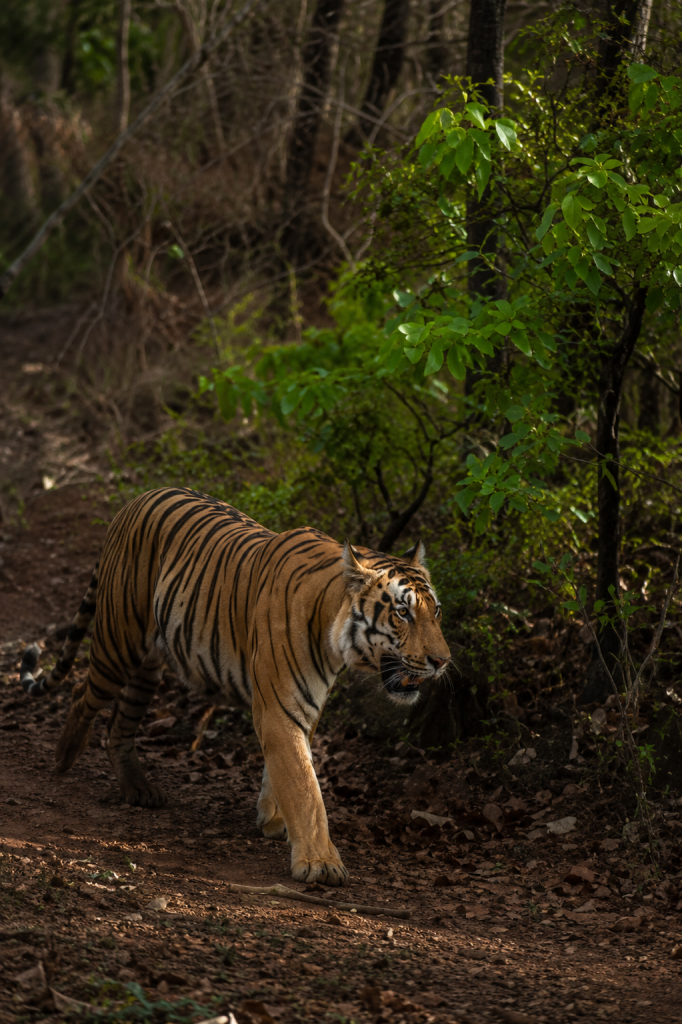
- Tiger activity this week was concentrated near the Madai core zone — particularly around shaded waterhole areas and the forest trail approaching a seasonal waterfall. Movement patterns suggest consistent big cat presence in this section, and conditions are as favourable as we have seen this season for photography and sightings. For more on what tiger behaviour looks like in Satpura’s core zone, read our earlier piece onhow tiger cubs grow in Satpura’s core zone.
As always sightings are never guaranteed. But conditions this week have been as good as we have seen this season.
For more on big cat encounters in Satpura, read: From Tiger Trails to Leopard Tales: A Thrilling Afternoon in Satpura
Sloth Bear, Mahua & the Forest in Seasonal Bloom
The Mahua trees are still holding. And where Mahua holds, sloth bears follow.
This is one of Satpura’s great seasonal rhythms — the fruiting of the Mahua tree in late spring draws sloth bears out into the open in a way that no other season quite manages. They arrive in the morning, often before the dew has fully lifted, and they feed with an absorption that is almost meditative to watch. This week, activity was highest around the Madai and Churna buffer zones, with sightings averaging roughly every second safari outing in those areas.
The forest itself is in that particular pre-monsoon tension — dry and golden in the teak sections, still lush and cool under the sal canopy. Waterholes are at their most critical and most productive. Animals that spent the cooler months ranging widely are now consolidating around water sources, which means that a patient afternoon at the right waterhole can produce encounters with a remarkable cross-section of Satpura’s wildlife.
This is the kind of slow, layered observation that sets a Satpura safari apart from the high-speed tiger chases of Kanha or Bandhavgarh. Here, the forest rewards attention over speed.
“Two species visiting Satpura right now — the Indian Pitta and the Indian Skimmer — are both coming here for the same fundamental reason: to breed and feed in a habitat that still works. The Pitta needs dense, undisturbed leaf litter and quiet forest. The Skimmer needs clean, unencroached river sandbars. The fact that Satpura still offers both, in the same landscape, tells you everything about why this reserve matters.”
Naturalist Observation of the Week
Pandav Naturalist Team, Satpura, May 2026
Planning Your Visit: What to Expect Right Now
If you are a guest making an enquiry — or already booked and reading this — here is a straightforward picture of what the forest is offering this week.
The core zone safaris from Madai gate are producing the most consistent big cat activity. Early morning starts before 6 AM are giving the best results, particularly on the waterhole and waterfall trails. The canoe safari on the Denwa is at or near its best for river bird photography — Skimmers, kingfishers, river terns, and crocodile activity are all strong.
Buffer zone safaris at Panarpani and Parsapani are producing excellent leopard sightings and the birding is exceptional — the Indian Pitta is calling through both buffer sections every morning without fail.
If you are staying at Pandav Retreat, Pandav Greens, Leher Sa, or Gourissa, speak with our naturalist team about configuring your safari schedule around current movement intelligence. A good naturalist does not just take you into the forest — they take you to the right part of the forest, at the right time, for the right reason.
That conversation starts at check-in. Sometimes even before.
Plan Your Safari at Satpura — Enquire With Us
If this week’s update has you planning your next move, now is a good time. The pre-monsoon window through May and early June is one of the most rewarding periods in Satpura — excellent wildlife activity, quieter trails, and a forest in its most atmospheric mood.
Our properties — Pandav Retreat, Pandav Greens, Leher Sa, and Gourissa — are among the finest accommodation options for guests seeking a genuine wildlife experience near Pachmarhi and the Satpura Tiger Reserve. Whether you are a serious birder, a wildlife photographer, or simply someone who wants to slow down inside a forest that still feels wild, we would love to help you plan it properly.
Write to us, call us, or fill in our safari enquiry form and our naturalist team will be in touch.
Looking for luxury hotel options in Pachmarhi combined with a Satpura safari experience? Explore our properties at Pandav Hotels & Resorts— where the forest begins the moment you arrive.
Frequently Asked Questions
Why is Satpura different from other tiger reserves like Kanha or Bandhavgarh?
Satpura is one of the few tiger reserves in India where you can combine a jeep safari, a walking safari, a canoe safari, and a night safari — all in the same visit. Unlike the highly trafficked circuits of Kanha or Bandhavgarh, Satpura’s core zones see far fewer vehicles, which means quieter forest, less disturbance, and wildlife that behaves naturally. It is a reserve built for the traveller who wants depth over numbers.
When is the best time to spot the Indian Pitta and Indian Skimmer at Satpura?
The Indian Pitta arrives in Satpura between May and June for its breeding season and is most vocal — and visible — in the early morning hours, particularly in dense sal forest sections. The Indian Skimmer is best observed between March and June, when the Denwa’s water levels are lower and the birds are feeding and breeding on exposed river sandbars. A canoe safari in the late afternoon is the ideal way to observe Skimmers in their natural feeding rhythm.
What is the difference between core and buffer zones in Satpura, and which activities are allowed where?
Satpura’s core zone, accessed via Madai and Churna gates, offers the wildest terrain with jeep safaris, walking safaris, and canoe experiences — and the highest chances of tiger and sloth bear sightings. The buffer zone, via Panarpani and Parsapani gates, is ideal for leopard sightings, night safaris, and year-round access including monsoon months. Combining both zones over a multi-day stay gives you the complete Satpura experience.How does Pandav’s naturalist-led approach improve wildlife sightings?
Our naturalists spend time in the field every day — tracking, observing, and building a real-time picture of animal movement across the reserve. When a reliable hint comes in — fresh tracks, an alarm call, a confirmed sighting from a trusted contact — we share it with our guests immediately so they can make an informed decision about their safari. This responsive, intelligence-driven approach is what separates a stay at Pandav from simply booking a jeep and hoping for the best.