
When Denwa Runs Full, the Forest Comes Alive
08-07-2026 | Satpura Diaries
Most travelers write off Satpura the moment monsoon arrives. The core zone closes, the roads turn muddy, and the assumption is simple: no safari, no reason to visit. Last week’s numbers tell a different story. 60% of safaris still ran through the buffer zone safari area, and half of them recorded tiger sightings — including a tigress spotted near Parsa Pani. Monsoon hasn’t shut Satpura down. It’s just changed what the forest has to offer.
Is a Safari Still Worth It in Satpura During Monsoon?
Yes — and the numbers back it up. While the core closes to protect breeding wildlife, the monsoon safari Satpura experience shifts entirely to the buffer zone, and it’s far from a consolation prize. Guides report sightings around Parsa pani with real consistency, and species behavior itself changes with the rain — sambar and spotted deer move differently, birds and mammals shift their patterns, and even nesting habits change through the season. It’s a different Satpura, not a lesser one.

Why Exploring Satpura with a Naturalist Changes Everything
Monsoon transforms Satpura into a living classroom, and the difference between simply driving through the forest and truly experiencing it often comes down to one person — your naturalist. Every call of a bird, fresh animal track, butterfly gathering, or glowing firefly tells a story that most visitors would otherwise miss.
At Pandav Hotels, our experienced naturalists don’t just guide safaris; they help guests understand the forest’s changing rhythms during the monsoon. From identifying the Peacock Pansy butterfly and explaining why frogs become so active after the rains to tracking wildlife movement in the buffer zone and revealing the science behind firefly displays, every outing becomes an immersive learning experience.
For guests seeking the real Satpura, it’s these shared stories, local knowledge, and close encounters with nature that make a monsoon stay unforgettable.
⭐“The jungle doesn’t become quieter during monsoon—it becomes more alive. You just have to know where to look.“
— Harendra Sahu, Naturalist, Pandav Hotels
What You Can Experience During Monsoon
| Experience | Best Time | Why It’s Special |
| Tiger Sighting | Early Morning | Buffer zone remains open |
| Firefly Show | Evening | Only during monsoon |
| Butterflies | Morning | Mud-puddling behaviour |
| Bird Watching | Through out the day | Breeding activity |
| Frogs & Amphibians | After Rain | Full lifecycle visible |
| UV Scorpion Walk | Night | Rare glowing experience |
Glow Where the Forest Stays Wild
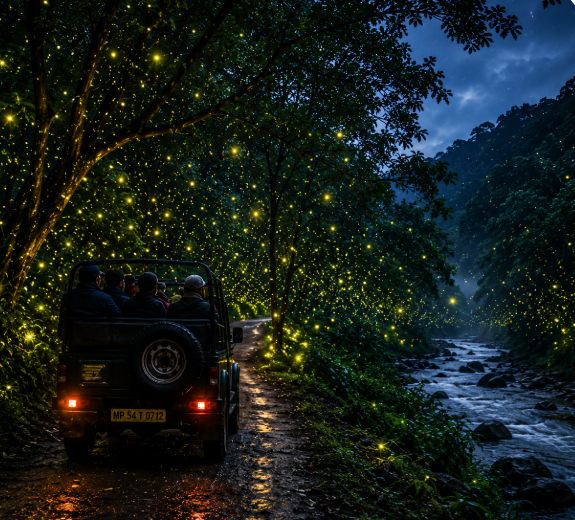
Ask any naturalist why fireflies gather exactly where they do, and the answer comes down to two things: water and moisture. Fireflies stay close to damp, shaded pockets of the forest — the kind found deep inside the tree line near streams and standing water — and they deliberately avoid artificial light. That’s not a coincidence. Light interferes with the glow signals fireflies use to find each other, so the darkest, wettest corners of the forest are exactly where the display is strongest. An evening safari timed right doesn’t just chase tigers — it can catch this entirely different kind of spectacle, one that only exists during these few monsoon months.
The Butterflies Monsoon Brings Out
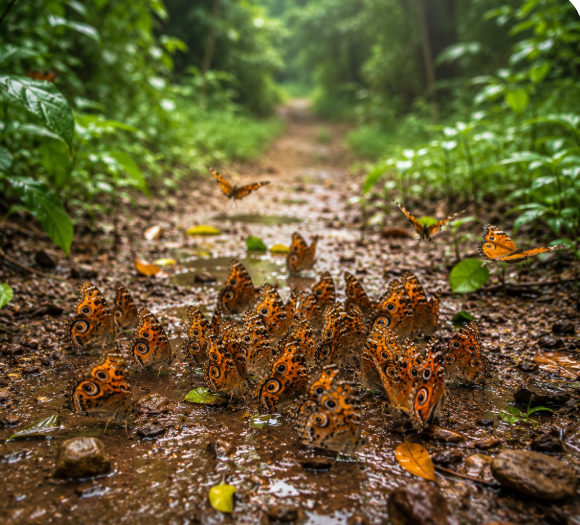
Talk to naturalist Harendra Sahu for five minutes during monsoon and butterflies come up almost as often as tigers. The Peacock Pansy is one of the season’s standout sightings — its wings carry a nearly identical pattern and color structure on both sides, a small detail that becomes obvious the moment you see one up close. Monsoon also brings mud-puddling, where dozens of butterflies gather on wet soil at once, turning an ordinary forest trail into a moving wall of color. For travelers who’ve only ever associated Satpura with big cats, this is often the bigger surprise.
A Front-Row Seat to the Forest’s Smallest Stories
Some of monsoon’s best wildlife moments happen at ground level. Frogs are everywhere this season, and guests get a rare chance to actually observe their full lifecycle — from egg, to tadpole, to fully formed frog — within a single guided walk. After dark, the forest offers one more surprise: scorpions, invisible by day, glow vividly under UV light, a detail most first-time visitors never expect and rarely forget. Between the amphibians, reptiles, and insects, a slow walk through the jungle during monsoon tells a completely different story than a daytime safari ever could
Did You Know?
- Monsoon Facts About Satpura
- 🐅 50% Buffer-Zone Tiger Sighting Rate was recently recorded, proving wildlife viewing continues even during the rainy season.
- ✨ Fireflies appear only for a few weeks each monsoon, thriving in dark, moisture-rich forest habitats.
- 🦋 Peacock Pansy butterflies are among Satpura’s most photographed monsoon species and can often be seen during mud-puddling.
- 🐸 Monsoon is the best time to observe amphibian lifecycles, from eggs and tadpoles to fully grown frogs.
- 🌿 The buffer zone remains open during the core-zone closure, offering safaris, birdwatching, nature walks, and unique wildlife experiences.
Book your stay today and discover the wild side of monsoon.
Where to Stay for a Monsoon Escape Near Madhai
For travelers planning around this season, the right base matters. Pandav Hotels operates two properties directly at the edge of Satpura’s buffer zone — positioning them among the most convenient Madhai jungle lodge and Madhai wildlife resort options for a monsoon stay. As part of a broader group considered among the best hotels in Madhya Pradesh, Pandav’s Madhai properties combine easy access to naturalist-led experiences with the comfort expected from a proper luxury resort in Madhya Pradesh. For anyone searching for a well-located hotel in Madai Madhya Pradesh, Lehar Sa Resort and Gourissa Resort remain the closest options to the buffer-zone action described above.
“We didn’t expect much going in monsoon, but the firefly walk alone made the trip. Watching an entire tree glow at night is something we still talk about months later.” — Guest Review, Pachmarhi
Monsoon at Satpura rewards a different kind of attention. According to the National Tiger Conservation Authority, core-zone closures during the breeding season are standard practice across India’s tiger reserves — a policy that protects the very ecosystem making these buffer-zone sightings possible in the first place.
Ready for a monsoon trip that’s about far more than the safari? Explore Madhai’s buffer-zone properties and plan your stay with Pandav Hotels.
Experience Satpura Beyond Tigers
If you’re looking for more than just wildlife sightings, monsoon is the perfect time to visit Madhai. From glowing fireflies and butterfly trails to peaceful buffer-zone safaris and luxury stays close to nature, Pandav Hotels offers a truly different Satpura experienc
Frequently Asked Questions
Is monsoon a good time to visit Satpura?
Yes — buffer-zone safaris stay fully active even with the core closed, and last week alone saw a 50% tiger sighting rate in the buffer area.
Can you still see tigers in Satpura during monsoon?
Yes. A tigress was recently sighted near Parsa Pani, alongside consistent sightings across the wider buffer zone.
Why do fireflies gather in specific parts of the forest?
Fireflies favor damp, shaded areas near water and actively avoid artificial light, which is why the deepest, darkest parts of the forest offer the best viewing.
What else can you see in Satpura besides tigers during monsoon?
Butterflies like the Peacock Pansy, frogs at every stage of their lifecycle, UV-glowing scorpions at night, and shifting bird and mammal behavior throughout the season.